Beyond the Purchase Price: What the Secondary Market Reveals About Saint Laurent's Long-Term Value
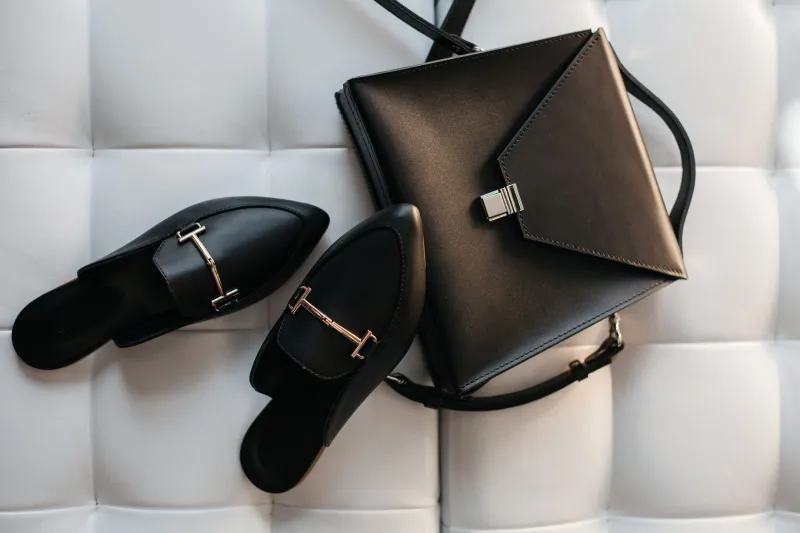
The conversation around luxury handbags in America has undergone a quiet but meaningful transformation over the past decade. What was once framed almost exclusively in the language of desire — the pleasure of acquisition, the prestige of ownership — is now increasingly discussed in the vocabulary of value retention, market liquidity, and long-term asset performance. For Saint Laurent, a house with deep roots in both artistic excellence and commercial authority, this shift presents a compelling opportunity to examine what the secondary market actually reveals about the brand's standing among serious collectors and practical investors alike.
The Investment Framing: Opportunity and Caution
Before examining specific data, it is worth establishing a clear-eyed framework for discussing handbag investment. The term itself carries risks of overstatement. Unlike equities or real estate, handbags do not generate income, and their value is subject to the considerable volatility of fashion cycles. That said, certain categories of luxury accessories have demonstrated a consistent capacity to retain — and in some cases appreciate — in value over time, and Saint Laurent occupies a credible position within that select group.
The American resale market for luxury goods has expanded substantially in recent years, driven in part by platforms that have introduced greater price transparency and buyer confidence. This expanded market has produced more reliable data on which brands and styles perform best over time, and that data offers Saint Laurent buyers meaningful guidance.
Which Styles Lead the Secondary Market
Not all Saint Laurent bags perform equally on the resale market, and understanding the distinctions between styles is essential for any buyer approaching a purchase with value retention in mind.
The Lou Camera Bag has emerged as one of the house's most consistently strong performers on resale platforms. Its compact dimensions, recognizable quilted texture, and YSL logo hardware make it immediately identifiable — a factor that matters considerably in secondary market transactions, where visual distinctiveness simplifies authentication and attracts broader buyer interest. Resale pricing for the Lou Camera Bag in good-to-excellent condition has historically hovered between 65 and 80 percent of original retail, a figure that compares favorably with many competing luxury brands at similar price points.
The Sunset Bag, with its distinctive flap closure and chain strap, has demonstrated similar resilience. Its versatility — functioning credibly as both a day bag and an evening accessory — broadens the pool of potential secondary buyers, which tends to support pricing stability. Versions in classic colorways, particularly black smooth leather, consistently outperform more experimental seasonal colors on the resale market.
The Sac de Jour, widely regarded as one of Saint Laurent's most architecturally serious offerings, occupies a particularly interesting position. Its association with professional dressing and its deliberately timeless silhouette attract buyers who are explicitly seeking longevity over novelty. Resale data suggests that the Sac de Jour in structured leather and neutral tones retains value at a rate comparable to the Lou Camera Bag, with the additional advantage of strong performance in larger size configurations — a category where many other luxury brands see sharper depreciation.
The Condition Premium: What the Data Confirms
Across all Saint Laurent styles, condition is the single most consequential variable in secondary market pricing. The differential between a bag rated "excellent" and one rated "good" on major resale platforms can range from 20 to 35 percent — a spread that underscores the importance of storage and maintenance practices for buyers who anticipate eventual resale.
Specific condition factors that most significantly affect Saint Laurent resale values include the state of the leather's surface (particularly corners and base studs), the functionality and appearance of hardware, the integrity of interior lining, and the presence of original packaging. Bags accompanied by their original dust bags, care cards, and box command a meaningful premium — often 10 to 15 percent above otherwise comparable pieces sold without original accessories.
Authentication documentation, while not always present for older pieces, has become increasingly valuable in the current market. As counterfeit sophistication has increased, buyers on secondary platforms are demonstrating a measurable willingness to pay for verified authentication, and pieces with documented provenance consistently attract more competitive bidding.
Authentication in the Current Landscape
The authentication ecosystem for Saint Laurent handbags has grown considerably more sophisticated in recent years, reflecting both the brand's popularity on the secondary market and the corresponding increase in counterfeit production. For American buyers engaging with resale platforms, understanding the current state of authentication is a practical necessity.
The most reliable authentication services now employ a combination of hardware analysis, stitching pattern examination, leather texture assessment, and serial number verification. Saint Laurent's internal numbering systems have evolved across production eras, and authenticators familiar with these changes can identify inconsistencies that less experienced evaluators might miss.
For buyers considering high-value secondary market purchases, independent authentication from a specialist service — rather than reliance solely on platform-provided verification — remains the most prudent approach. The cost of professional authentication, typically between $20 and $50 depending on the service, represents a negligible fraction of the transaction value for bags in the $1,000-and-above range.
Pricing Trends and Market Positioning
Broader market data suggests that Saint Laurent's secondary market positioning has strengthened over the past five years, a trend that aligns with the brand's increased visibility in American luxury culture and its consistent retail price increases. When a brand raises retail prices — as Saint Laurent has done periodically across its core styles — secondary market values tend to adjust upward correspondingly, benefiting holders of earlier-generation pieces.
Comparisons with other luxury houses are instructive but require nuance. Certain competitors, particularly those with more aggressively managed scarcity strategies, demonstrate higher resale-to-retail ratios for their most coveted styles. However, Saint Laurent's broader range of accessible price points and its more consistent availability at retail create a different kind of value proposition — one characterized by reliable retention rather than speculative appreciation.
Practical Guidance for the Value-Conscious Buyer
For American consumers approaching a Saint Laurent purchase with resale value as one consideration among several, the following principles emerge clearly from secondary market data:
Prioritize classic colorways — black, cognac, and neutral tones — over seasonal colors, which tend to depreciate more sharply. Invest in structured leather styles over fabric or exotic treatments, which attract narrower secondary buyer pools. Retain all original packaging and documentation from the point of purchase. Store bags properly, using dust bags and structured inserts to preserve shape. And consider the full cost of ownership, including potential authentication and consignment fees, when evaluating the economic case for any specific purchase.
The case for Saint Laurent as a considered luxury investment is not built on dramatic appreciation stories. It is built on something more durable: a consistent capacity to retain meaningful value over time, supported by a brand identity strong enough to sustain secondary market demand across generations of American luxury consumers. For the buyer who approaches the decision with both aesthetic judgment and financial awareness, that combination represents a compelling foundation.