What Your Saint Laurent Bag Is Made Of: A Collector's Guide to Leather Grades, Tanneries, and Aging Potential
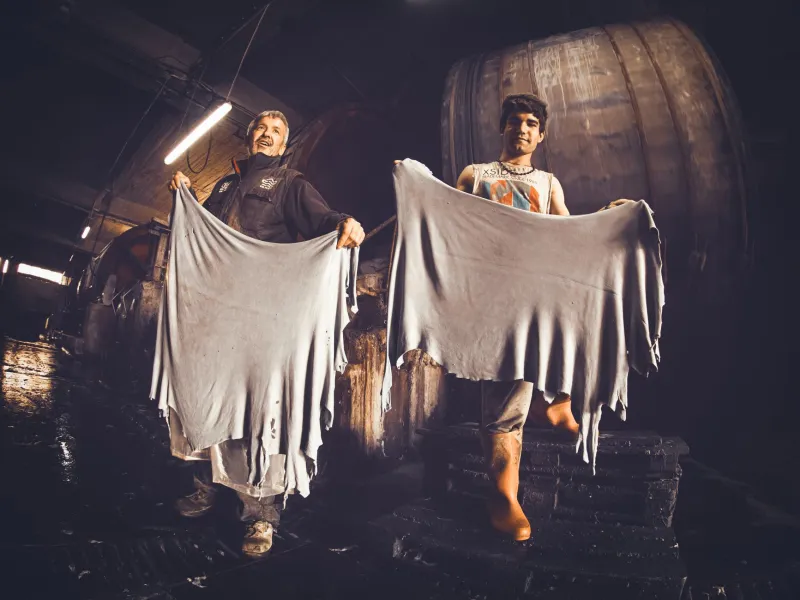
When a Saint Laurent handbag commands thousands of dollars and a place of permanence in an American collector's wardrobe, the conversation rarely begins where it should: with the hide itself. The artistry of a finished bag — its stitching, its hardware, its silhouette — is immediately visible. The leather beneath those details is not. Yet it is the leather that ultimately determines whether a bag deepens into a prized possession over a decade or begins to disappoint within a few years of regular use.
This guide examines the materials that Saint Laurent selects across its handbag collections, the tannery relationships that shape those materials, and the practical implications for anyone making a serious acquisition.
Why Leather Selection Is a Strategic Decision, Not an Aesthetic One
For the uninitiated, leather is leather. For the experienced collector, it is a spectrum — one that encompasses origin, breed, age of the animal, tanning method, finishing process, and intended use. Saint Laurent works across this spectrum deliberately, deploying different leather types to achieve specific results in specific collections.
A bag intended to maintain a structured, polished silhouette — such as the Sac de Jour — requires leather with a tight grain and high tensile strength. A bag designed to develop character with wear — such as the Loulou or the Kate — benefits from a more supple, grain-forward hide that responds to handling. The choice is not arbitrary. It reflects a considered relationship between material properties and design intent.
For American buyers investing in Saint Laurent for the long term, understanding this relationship transforms the purchasing process from an aesthetic exercise into an informed material assessment.
The Primary Leathers in Saint Laurent's Collection
Smooth Calfskin
Smooth calfskin is among the most frequently used leathers across Saint Laurent's core handbag lineup. Sourced from young cattle and processed to minimize visible grain, it presents a refined, almost lacquered surface that photographs exceptionally well and reads as unambiguously luxurious in person.
The trade-off is sensitivity. Smooth calfskin is prone to scuffing and surface scratches, particularly in darker colorways where contrast is more visible. It does not develop a traditional patina in the way that vegetable-tanned leathers do. Instead, it tends to either maintain its original appearance with diligent care or show wear more starkly than grain-forward alternatives.
For collectors who prioritize pristine presentation and rotate their bags frequently, smooth calfskin is an excellent choice. For those who carry a single bag daily across varied environments, more durable alternatives may serve better.
Grained Calfskin
Grained calfskin — produced by embossing or retaining the natural texture of the hide — offers a meaningful durability advantage over its smooth counterpart. The textured surface disperses minor abrasions rather than concentrating them, making this leather considerably more forgiving under regular use.
Saint Laurent employs grained calfskin across a wide range of its structured and semi-structured styles. The grain can range from fine and subtle to more pronounced, depending on the collection and season. In practical terms, a bag in grained calfskin will look presentable with far less maintenance than a smooth leather equivalent, making it a compelling choice for American collectors who live active professional and social lives.
Suede
Suede occupies a unique position in the Saint Laurent material vocabulary. Produced from the inner split of the hide, it offers an exceptionally soft hand and a matte, velvety surface that reads as distinctly different from polished leather alternatives.
The durability profile of suede is nuanced. It is highly susceptible to water damage and staining, which limits its practicality in wet climates or high-use scenarios. However, when properly maintained — and particularly when treated with a quality suede protector prior to use — it can hold up admirably over time. Saint Laurent's suede tends to be dense and well-finished, which contributes to better longevity than entry-level suede products.
For collectors in drier American cities, suede Saint Laurent pieces represent an excellent opportunity to own something visually distinctive. For those in cities with unpredictable weather, rotation with a more weather-resistant bag is strongly advisable.
Crocodile, Python, and Exotic Leathers
At the upper register of Saint Laurent's material hierarchy sit the exotic leathers: crocodilian skins, python, and ostrich, among others. These materials are sourced through regulated channels and processed by specialist tanneries — often in France and Italy — that have cultivated expertise in these demanding hides over generations.
Exotic leathers bring exceptional durability to the table. Crocodile, in particular, is extraordinarily resistant to wear and maintains its surface integrity far longer than bovine leathers under equivalent conditions. The scarcity of these materials, combined with their durability and the craftsmanship required to work with them, places exotic-leather Saint Laurent pieces in a distinct investment category.
The Role of Tanneries in Final Quality
The tannery is where a raw hide becomes a usable luxury material, and the quality of that transformation is not uniform across the industry. Saint Laurent, like other Kering-owned houses, benefits from access to tanneries that operate at the highest level of the craft — many of which are concentrated in the Veneto region of Italy and the Ganterie district of France.
Vegetable tanning, one of the oldest methods in existence, uses plant-derived tannins to convert hides over a period of weeks or months. The result is a leather that is firmer, more structured, and notably more capable of developing a rich patina with age and exposure to natural oils. Chrome tanning, by contrast, is faster and produces a softer, more uniform leather that is less prone to stiffness but typically less capable of the deep aging characteristics that collectors prize.
Saint Laurent employs both methods across its range, and understanding which process was used on a specific bag provides meaningful insight into how that bag will evolve. Pieces in vegetable-tanned leather are the ones most likely to deepen in tone, develop a personal character with use, and attract significant secondary market interest over time.
Reading a Bag's Aging Potential Before You Buy
For collectors approaching a Saint Laurent purchase with long-term value in mind, several practical indicators can help assess aging potential before committing.
First, examine the cut edges of the bag — where leather layers meet at seams and handles. A high-quality, well-tanned leather will show clean, dense edges that resist fraying. Second, press gently against the body of the bag. Leather with good structural integrity will return to shape immediately; lesser materials may retain the impression briefly. Third, consult with the boutique regarding the specific leather used in the piece. Saint Laurent's sales associates at authorized US locations are generally well-informed about material specifications and can direct you to the appropriate documentation.
Finally, consider the colorway. Darker and more saturated dyes tend to require more aggressive processing, which can affect the leather's natural character. Natural, undyed, or lightly finished leathers are often the most capable of developing the kind of luminous patina that elevates a bag from accessory to heirloom.
The Material Is the Message
A Saint Laurent handbag is a long-term relationship. The leather it is made from determines the terms of that relationship — how demanding it will be, how rewarding it becomes, and how gracefully it transitions from new acquisition to treasured possession. Approaching that material with the same rigor one would apply to any significant investment is not excessive. It is, in fact, the mark of a true collector.