Three Roles, One Budget: A Regret-Free Saint Laurent Starter Rotation
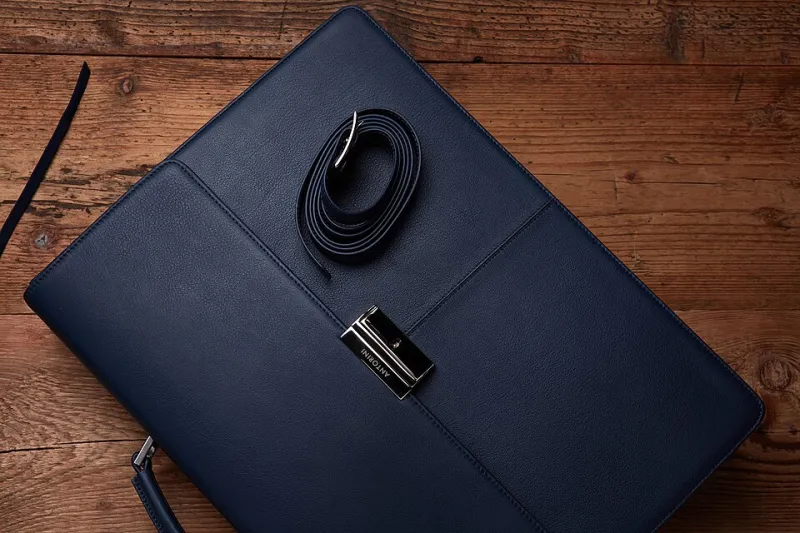
Photo: Antorini, CC BY-SA 4.0, via Wikimedia Commons
Building a Saint Laurent handbag collection under $6,000 is not an exercise in compromise. It is an exercise in casting. The most useful rotations are not the ones with the most pieces; they are the ones in which each bag has a clear job. For American buyers navigating a market that rewards both new-season polish and well-preserved pre-owned value, the goal is range without repetition. A three-bag starter collection can deliver that range if the budget is allocated by role rather than by impulse.
Start With Roles, Not Silhouettes
Most first-time collectors begin with a silhouette they have seen in a photograph. A more durable method begins with a calendar. Consider the three settings that recur most often in American life: weekday movement, evening occasions, and weekend ease. Each setting imposes different requirements on size, structure, closure, and formality. When those requirements are written down first, the bags that follow are easier to choose and harder to duplicate.
Role One: Everyday Carry
The everyday bag should absorb the unglamorous reality of the week: commuting, meetings, errands, and the occasional after-work dinner. It needs a secure closure, a comfortable carry option, and enough capacity for a phone, wallet, keys, and a small pouch without becoming a tote. In a $6,000 framework, this is the role that deserves the largest share—roughly $2,400 to $3,000, whether new or excellent-condition pre-owned. A structured leather shoulder bag or a compact top-handle model often serves this role well. The test is not whether it photographs beautifully on a shelf; it is whether it can be carried for six hours without becoming an inconvenience.
Role Two: Evening Polish
The evening bag has a narrower brief, which is why it can be the most efficient purchase in the rotation. It should be small, deliberate, and capable of elevating a simple dress or a dark suit. A chain-strap mini, a compact clutch, or a refined pochette can perform this function. Budget approximately $1,200 to $1,800. In this category, pre-owned excellence is especially persuasive: evening bags are often carried less frequently, and a well-kept example can offer the same visual authority as a new one at a meaningfully lower price. The mistake is buying an evening bag that is merely small. Smallness is not polish; proportion, hardware, and finish are.
Role Three: Weekend Ease
The weekend bag should feel more relaxed than the weekday bag but remain composed enough for brunch, travel, and informal social plans. This is where a softer leather, a slouchier profile, or a larger crossbody can enter the rotation. Allocate $1,500 to $2,000. The weekend role is also the place to consider a color or finish that would feel too specific for the office. A muted seasonal shade or a tactile leather can add range without competing with the everyday bag. The criterion is ease: the bag should be simple to carry, simple to style, and simple to live with.
New Versus Excellent Pre-Owned
The new-versus-pre-owned decision should be made role by role, not as a blanket policy. New purchases offer the reassurance of untouched condition, current-season availability, and direct after-sales support. Excellent-condition pre-owned offers access to discontinued shapes, lower entry points, and the possibility of allocating more budget to the everyday bag. For a $6,000 rotation, a hybrid approach is often the most rational: buy the everyday bag new if condition and direct recourse matter most, then source the evening and weekend roles from reputable pre-owned sellers with clear authentication and return policies. American buyers should account for sales tax, shipping, and any authentication fees in the total. A bag that costs $2,000 before tax is not a $2,000 bag at checkout.
Three Duplication Traps
First, the black-bag trap. Three black bags in three sizes can look like a collection but function like one bag. If black is the anchor, let the second and third pieces differ in texture, hardware, or color temperature. Second, the occasion trap. A buyer may purchase two evening bags because both are beautiful, leaving the everyday role underfunded. The rotation should be balanced before it is expanded. Third, the size trap. A mini and a small bag are not automatically different roles. If both hold the same essentials and suit the same occasions, one is redundant.
A Decision Framework That Protects the Budget
Before purchasing, assign each candidate a single primary role. If a bag cannot be assigned without qualification, it is probably a fourth bag, not one of the first three. Next, set a hard ceiling for the total and a soft ceiling for each role. Leave a 10 percent buffer for tax and ancillary costs. Then rank candidates by function first, condition second, and emotional pull third. Emotional pull matters—these are luxury objects—but it should not override the role. Finally, wait one week before committing to any piece that was not on the original role list. The delay is not indecision; it is quality control.
The Rotation in Practice
A sensible under-$6,000 rotation might look like this: a new or excellent-condition structured shoulder bag for weekday use, a pre-owned chain-strap mini for evening, and a softer crossbody or compact hobo for weekends. The exact silhouettes matter less than the separation of duties. The result is not a collection that covers every conceivable occasion. It is a collection that covers the occasions that actually recur—and does so without regret.