Light, Angle, Legacy: A Collector's Guide to Editorial-Grade Saint Laurent Photography on Your Phone
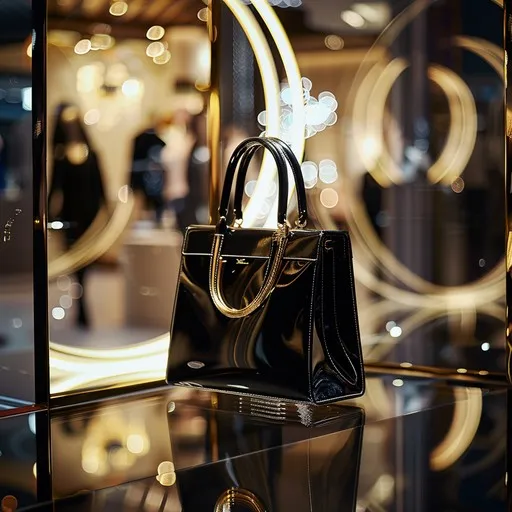
Photo: black designer handbag flat lay marble smartphone photography golden hour, via images.stockcake.com
There is a particular satisfaction in photographing a Saint Laurent handbag well. The silhouettes — the chevron quilting of the Loulou, the razor-sharp geometry of the Envelope, the understated polish of the Le 5 à 7 — were designed to be seen, and a thoughtful image honors that intent. The good news for American collectors: the gap between a smartphone snapshot and something resembling an editorial spread is narrower than most people assume. It comes down to three disciplines — light, composition, and restraint.
Chase the Light, Don't Fight It
Every experienced handbag photographer will tell you the same thing: lighting accounts for the majority of an image's quality. Direct midday sun is the enemy — it blows out the texture of grained calfskin and turns quilted lambskin into a flat white mass. Instead, work with what photographers call open shade: a covered patio, a north-facing window, or the soft glow of golden hour, roughly the hour after sunrise or before sunset.
That last window is where the phrase "golden hour" earns its reputation. In coastal cities like Los Angeles and Miami, collectors schedule their shoots around it deliberately. The warm, diffused light deepens black leather rather than washing it out and gives metallic hardware — the interlocking YSL monogram, the Cassandre clasp — a gentle luminance that midday sun distorts.
Indoors, position your bag near a window at a slight angle rather than facing it directly. A white foam board from any craft store, costing a few dollars, bounced back onto the shadow side will soften contrast dramatically. This single trick separates amateur images from considered ones.
The Backdrop Should Whisper, Not Shout
The most common mistake among new collectors is over-styling. Saint Laurent's design language is rooted in restraint — the house built its identity on the tuxedo, after all — so the backdrop should follow suit.
Consider what works in practice:
- Marble and stone. A marble countertop or a stone step evokes the polished interiors of a boutique on Madison Avenue or Rodeo Drive.
- Linen and bouclé. A neutral throw or an ivory bouclé chair nods to the fabric heritage of French couture without competing for attention.
- Architectural concrete. For a moodier, more contemporary feel, concrete and plaster surfaces let the bag's structure carry the frame.
Avoid busy patterns, saturated colors, and anything with visible branding. The bag is the subject; everything else is atmosphere.
Angles That Flatter the Silhouette
Photographing a handbag is closer to portraiture than product documentation. Three angles cover nearly every need:
The classic three-quarter. Rotate the bag roughly thirty degrees from the camera rather than shooting it dead-on. This reveals the depth of the silhouette and lets the hardware catch light asymmetrically — far more dynamic than a flat frontal shot.
The elevated flat-lay. Shot from directly above, this is the format that built Instagram's handbag community. Place the bag on your chosen surface, and consider a single styled element: a folded pair of sunglasses, a silk scarf loosely draped at the frame's edge, or a hardcover art book. One or two props maximum. Three or more begins to look like a retail advertisement.
The detail crop. Move close — uncomfortably close — and photograph the stitching, the clasp, the edge paint. Macro-style images of the Cassandre turn-lock or the quilting pattern communicate quality in a way full-frame shots cannot, and they perform exceptionally well on social platforms where texture drives engagement.
Lessons from the Curators
American Instagram accounts devoted to luxury handbag photography have quietly professionalized over the past five years, and their habits are instructive. Several recurring principles emerge from conversations with collectors who've built audiences around their flat-lays:
First, consistency beats perfection. A cohesive palette — say, black, cream, and warm neutrals across an entire feed — reads as intentional and elevates even modest images.
Second, negative space is a feature, not a flaw. Novice photographers fill the frame; editors leave it breathing. Position the bag off-center and let the composition suggest a life around it.
Third, wear it once in a while. The most engaging images in the handbag community are rarely sterile product shots — they're the bag on a shoulder at a café table in SoHo, or carried through an airport terminal. Context sells the fantasy of ownership better than any flat-lay can.
Small Technical Details That Matter
A few final practices worth adopting:
- Wipe the hardware with a microfiber cloth immediately before shooting; fingerprints on the YSL plaque are the first thing a discerning eye notices.
- Stuff the bag lightly with tissue paper so it holds its intended shape rather than slumping.
- Shoot in your phone's highest quality setting and avoid digital zoom, which degrades detail — move your feet instead.
- Edit gently. A slight adjustment to exposure and warmth is fine; heavy filters flatten the very leather texture you're trying to showcase.
The Deeper Point
Photographing a Saint Laurent bag well is, ultimately, an act of attention. It requires slowing down, studying the object, and seeing what the design team at the house intended. In that sense, the camera phone has done something unexpected for luxury collecting: it has turned owners into students of their own possessions. The image is simply the evidence.