The Vintage Verdict: Why a New Generation of American Collectors Is Choosing Archive Over Aisle
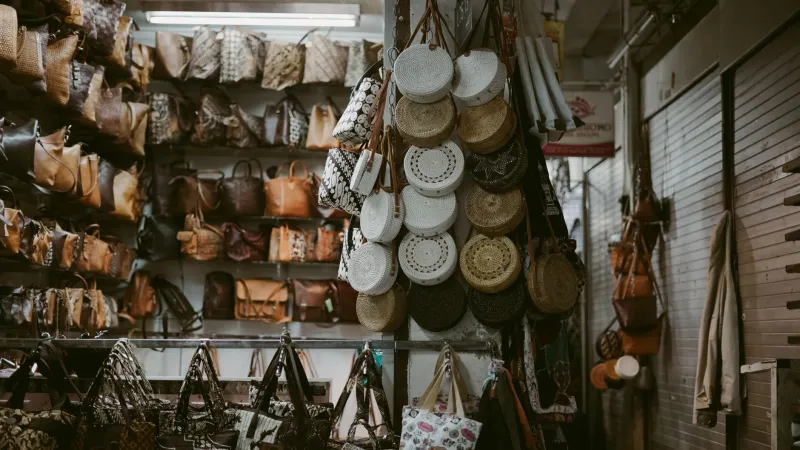
Walk through the vintage market at any major American city's fashion week adjacent events, or scroll through the more discerning corners of the pre-owned luxury ecosystem, and you will encounter a pattern that challenges conventional assumptions about how younger consumers engage with high fashion. The buyer examining a 2009 Saint Laurent Downtown bag with genuine scholarly interest is not, as the stereotype might suggest, a budget-conscious shopper seeking a luxury approximation. She is a collector—often highly informed, sometimes professionally connected to the fashion world—who has made a deliberate choice to look backward rather than forward.
This is the vintage turn, and among a specific cohort of younger American luxury buyers, it is reshaping the market for Saint Laurent's archival pieces in ways that the house's original designers could not have anticipated.
What the Archive Offers That the Boutique Cannot
The appeal of vintage Saint Laurent is not reducible to a single factor, but craftsmanship consistently emerges as the primary consideration among serious collectors. Pieces from the late 2000s and early 2010s—particularly those produced during the creative directorship of Stefano Pilati—are frequently cited for leather quality, interior construction details, and hardware weight that collectors argue is difficult to replicate in current production.
This perception is not merely romantic. The luxury goods industry underwent significant production shifts during the mid-2010s as major conglomerates rationalized manufacturing processes across their portfolio brands. Collectors who have handled pieces from different eras with a practiced eye can often identify tangible differences in stitching density, edge finishing, and the quality of interior linings. For buyers who prioritize material integrity above all else, the archive is not a compromise. It is the preference.
Beyond construction, archival pieces offer design details that current collections have largely moved away from. The exaggerated proportions of certain Pilati-era pieces, the specific hardware configurations of the early Tom Ford years, the distinctive leather treatments of limited mid-decade releases—these are aesthetic signatures that cannot be reproduced because they belong to a specific creative moment. For collectors who value singularity, this irreproducibility is precisely the point.
A Rebellion With Excellent Taste
There is also a cultural dimension to this preference that deserves honest examination. The younger collectors who have turned toward vintage Saint Laurent are, in many cases, making a pointed statement about the contemporary luxury market—one they find increasingly homogenized, algorithmically driven, and disconnected from the creative risk-taking that originally defined houses like Saint Laurent.
The current luxury landscape, as this cohort perceives it, has produced a proliferation of nearly identical structured bags across competing houses, driven by what sells on social platforms rather than what advances a genuine creative vision. Against this backdrop, choosing a 2011 Saint Laurent piece over a current-season equivalent is an act of aesthetic differentiation. It says something about the collector's values that a boutique purchase, however beautiful, cannot quite replicate.
This is not anti-luxury sentiment. These buyers are spending serious money—often more, in the case of rare archival pieces, than a comparable current-season item would cost. What they are rejecting is not quality or heritage but what they perceive as a certain creative timidity in the contemporary market.
The Hunt as Part of the Value
For younger collectors accustomed to instant digital gratification, the process of locating, evaluating, and acquiring a specific archival Saint Laurent piece provides something that a boutique transaction fundamentally cannot: genuine discovery.
The hunt for a specific vintage piece—a particular colorway of the Muse bag, a specific hardware configuration of the Tribute series, an early iteration of a silhouette that later became iconic—requires knowledge, patience, and a willingness to engage with the secondary market at a level of sophistication that goes well beyond clicking a purchase button. Collectors who have developed this competency describe it in terms that echo the language of connoisseurship: the satisfaction of knowing what you are looking for, recognizing it when you find it, and understanding precisely why it matters.
This expertise has also created a community. Younger Saint Laurent collectors have built networks—through social platforms, private resale channels, and vintage market events in cities like New York, Los Angeles, and Miami—that function as genuine communities of knowledge. Information about upcoming estate sales, reliable authentication sources, and the relative rarity of specific configurations circulates through these networks in ways that reward engagement and expertise.
Authentication and the Knowledge Premium
The shift toward vintage acquisition is not without its complications. The pre-owned luxury market, while significantly more organized than it was a decade ago, still presents meaningful authentication challenges. Archival Saint Laurent pieces are among the most frequently replicated in the counterfeit market, and the construction details that make genuine pieces valuable are also the details that sophisticated counterfeiters attempt to replicate most carefully.
Younger collectors who have committed to the vintage market have responded by developing authentication literacy that often exceeds that of casual buyers. Understanding the specific hardware finishes used in a given production year, recognizing the correct font and spacing of period-appropriate interior stamps, and knowing which leather treatments are consistent with a particular era's production—these are skills that serious archival collectors have cultivated through study and experience.
Reputable authentication services and established vintage dealers have become essential partners in this ecosystem, providing the expert verification that gives both buyers and sellers confidence in transactions involving significant sums.
The Archival Piece as Cultural Artifact
Perhaps the most revealing aspect of this trend is what it suggests about how younger collectors understand the relationship between fashion and culture. For this cohort, a Saint Laurent bag from 2008 is not simply a well-made object. It is a document—a physical record of a specific creative moment, a particular cultural mood, a specific vision of what luxury could mean.
This is, in its own way, a deeply sophisticated form of collecting. It treats fashion history with the same seriousness that previous generations reserved for art or music, and it positions the handbag as something more than a functional object or a status symbol. It is, for these collectors, a piece of the archive—and the archive, they have decided, is where the most interesting stories live.