One Bag, Every Season: Building a Saint Laurent Wardrobe That Never Stands Still
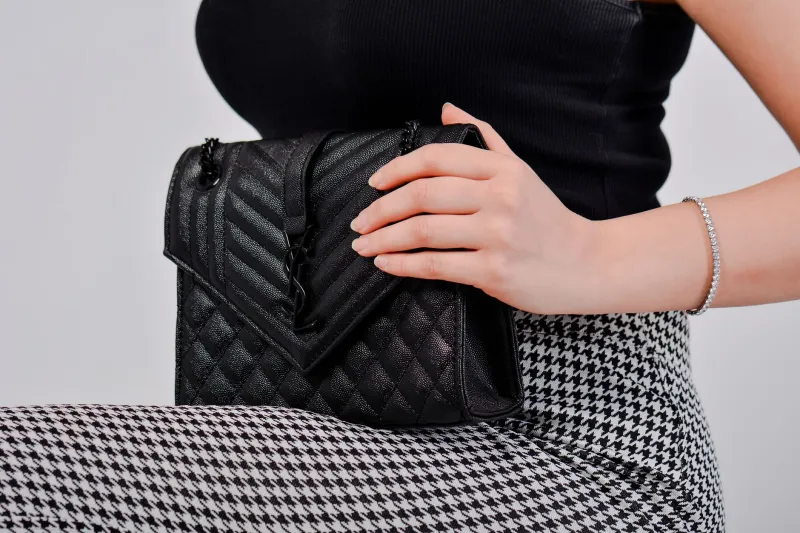
There is a particular kind of luxury that reveals itself not in the moment of purchase, but over years of continuous use. A Saint Laurent handbag that accompanies its owner from a January board meeting to a July rooftop gathering—and does so with equal authority—represents something more valuable than mere aesthetic appeal. It represents genuine design intelligence. Understanding which pieces possess this quality, and why, is the foundation of a considered Saint Laurent collection.
The Architecture of Versatility
Not every luxury handbag is built for the long game. Seasonal novelty pieces, however beautiful in isolation, are designed to capture a moment rather than transcend it. Saint Laurent's most enduring silhouettes operate on an entirely different principle. The Sac de Jour, for instance, was conceived as a study in structural restraint—its clean rectangular form and minimal hardware ensuring that it reads as appropriate in virtually any professional or social context. The absence of trend-dependent embellishment is not a limitation; it is the very source of its longevity.
Similarly, the Lou Camera Bag and the Kate Tassel Clutch occupy specific but surprisingly wide-ranging style territories. The former's compact, crossbody format makes it equally at home against a winter coat or a summer sundress, while the latter transitions from black-tie accessory to elevated casual piece depending almost entirely on the styling choices made around it. Saint Laurent has long understood that the silhouette itself must function as a neutral—a fixed point around which seasonal wardrobes can rotate.
Material Intelligence: What Holds Up Across Climates
American consumers navigate a wide range of climates and occasions throughout the calendar year, and material selection becomes critical when evaluating cross-seasonal potential. Smooth calfskin, the standard for many of Saint Laurent's flagship pieces, offers a surface that photographs beautifully in summer light and carries equal weight beside heavier fall textures. It does not compete with seasonal materials; it complements them.
Grained leather, used extensively in the Loulou and Niki families, introduces a textural dimension that arguably performs even more broadly. The subtle pebbling catches light differently depending on the environment—sharper and more defined in winter indoor settings, softer and more organic in outdoor summer contexts. This material adaptability is rarely discussed in purchasing conversations but proves enormously relevant over the lifespan of a bag.
For those considering patent finishes or suede options, the calculus shifts. Patent leather carries an inherently evening-forward connotation in American fashion culture, limiting its daytime versatility without careful styling. Suede, while luxurious, introduces seasonal sensitivity—particularly relevant in cities where late-fall and winter weather presents real maintenance concerns. For the collector prioritizing cross-seasonal utility, smooth or grained calfskin consistently offers the broadest range of application.
Color as a Year-Round Strategy
The conventional wisdom around luxury handbag color—invest in black, navy, or camel for maximum wearability—remains broadly sound, but it understates the range of Saint Laurent's neutral offerings. The brand's interpretation of black is notably varied: some finishes carry a cool, almost architectural quality suited to structured professional environments, while others read warmer and more relaxed. Understanding these distinctions matters when building a collection intended to span multiple contexts.
Beyond the traditional neutrals, Saint Laurent's approach to certain mid-tone colors deserves attention. A deep burgundy or cognac tone, for example, functions as a seasonal chameleon in American wardrobes. Against the light linens and cotton of summer, such colors provide grounding contrast. Against the richer textures of fall and winter clothing, they integrate seamlessly. These are not seasonal statement colors—they are year-round investments that happen to carry more visual interest than strict black.
Bright seasonal colors—cobalt, coral, electric yellow—occupy a different category entirely. They are not without merit, and Saint Laurent executes them with considerable sophistication, but their wardrobe integration demands more intentionality. For consumers prioritizing versatility over novelty, these pieces are best approached as accent acquisitions rather than anchor investments.
Occasion Fluidity: The Styling Framework
Perhaps the most underappreciated dimension of cross-seasonal Saint Laurent dressing is the role of styling architecture—the choices made around the bag rather than the bag itself. The same Sac de Jour carried with a structured blazer and trousers reads as a polished professional accessory in a Manhattan office. Paired with wide-leg denim and a cashmere turtleneck on a Saturday in Chicago, it communicates effortless weekend luxury. The bag has not changed; the context has been carefully constructed.
This principle extends to evening dressing. The Envelope Clutch, often positioned as a formal piece, translates surprisingly well into elevated casual territory when carried loosely under the arm rather than formally in hand. The physical gesture of carrying a bag contributes meaningfully to its occasion register—a detail that experienced Saint Laurent collectors leverage deliberately.
For those building a cohesive collection rather than acquiring individual pieces, the goal is not to own one bag that does everything, but to develop a small group of pieces whose combined range covers the full spectrum of American life. A structured tote for professional settings, a mid-sized crossbody for active social occasions, and a compact evening piece together constitute a remarkably complete wardrobe solution—provided each is selected with cross-seasonal material and color intelligence.
The Investment Argument, Reconsidered
The financial case for Saint Laurent's most versatile pieces is straightforward: cost-per-wear decreases dramatically when a bag moves freely across seasons and occasions rather than sitting dormant for six months of the year. A piece acquired for its seasonal novelty may photograph beautifully in October but contribute little to a wardrobe in April. A piece acquired for its structural and material intelligence compounds its value continuously.
This is, ultimately, the distinction between fashion and style—a distinction that Saint Laurent, as a house, has always understood with particular clarity. The most sophisticated collections are not the largest. They are the most considered.