Wealth That Wears Well: The Rise of the Saint Laurent Handbag as a Multi-Generational Family Asset
A New Language of Inheritance
For much of the twentieth century, American family wealth passed between generations in predictable forms: real estate, securities, jewelry, and, in certain circles, fine art. The handbag occupied a different register entirely — cherished, certainly, but categorized as personal property rather than patrimony. That distinction is becoming harder to maintain.
Across coastal wealth centers and in the estates of families whose luxury consumption spans multiple decades, a more deliberate calculus has begun to govern the acquisition of Saint Laurent handbags. These are no longer purchased solely for the pleasure of ownership. They are being selected, documented, stored, and in some cases insured as part of a broader strategy of tangible asset preservation — one that anticipates transfer to the next generation as naturally as the family silver.
The Conditions That Created This Shift
Several converging forces have elevated the Saint Laurent handbag from accessory to asset class in the eyes of American luxury families.
The first is demonstrable appreciation. The secondary market for Saint Laurent's most iconic styles — the Sac de Jour, the classic Loulou, the Kate clutch — has shown consistent price growth over the past decade. Platforms specializing in authenticated resale have published data indicating that certain discontinued colorways and limited-edition configurations command prices that substantially exceed their original retail value. For families accustomed to evaluating purchases through an investment lens, this trajectory carries unmistakable significance.
The second force is scarcity by design. Saint Laurent, like its peers in the highest tier of French luxury, manages production with deliberate restraint. Limited seasonal runs, periodic discontinuation of beloved styles, and the controlled availability of exotic skin configurations ensure that supply never fully satisfies demand. This structural scarcity is the engine of long-term value retention, and sophisticated buyers understand it as such.
The third is brand permanence. Yves Saint Laurent founded his house in 1961. It has survived ownership transitions, creative reinventions, and the full turbulence of the global luxury market across six decades. The continuity of the YSL monogram, the endurance of its most iconic silhouettes, and the institutional weight of its Paris heritage give it the kind of cultural permanence that underpins lasting asset value — the same quality that makes a Patek Philippe watch or a Hermès Kelly worth preserving across generations.
How Families Are Structuring These Acquisitions
The practical mechanics of treating Saint Laurent handbags as multi-generational assets differ meaningfully from standard luxury purchasing behavior.
Documentation is foundational. Families approaching these acquisitions with estate-planning seriousness maintain meticulous records: original receipts, certificates of authenticity, purchase dates, condition reports, and in some cases professional appraisals conducted by luxury goods specialists. This paperwork is not merely administrative — it is the chain of provenance that supports both insurance claims and future resale verification.
Storage protocols reflect a similar level of intentionality. Pieces designated for long-term preservation are stored in climate-controlled environments, away from UV exposure and humidity fluctuation. Original packaging — boxes, dust bags, authenticity cards — is retained in full, as these materials contribute meaningfully to resale and estate valuation.
Insurance coverage is another dimension that distinguishes this approach from casual collecting. Standard homeowner's policies rarely provide adequate coverage for high-value personal property at current replacement costs. Families with significant Saint Laurent holdings are increasingly working with specialty insurers who offer scheduled personal property policies that account for market appreciation over time.
The Cultural Logic of the Wearable Heirloom
Beyond the financial calculus, there is a cultural dimension to this trend that deserves careful consideration. The handbag occupies a unique position among luxury goods: it is simultaneously a functional object, a personal adornment, and a carrier of biography. A Saint Laurent bag that accompanied its first owner through significant professional and personal milestones accumulates a kind of narrative value that purely financial instruments cannot replicate.
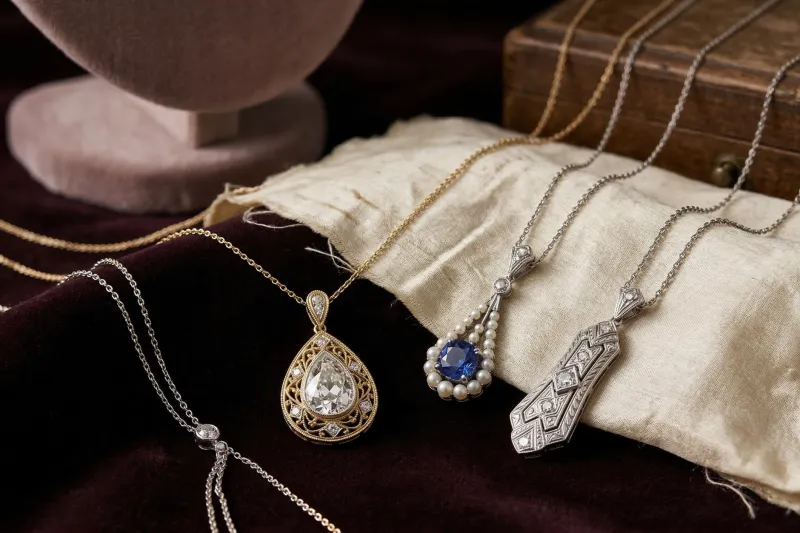
This is a quality shared with fine jewelry, another category long understood as heirloom currency. The grandmother's Cartier bracelet is precious not only for its intrinsic material value but for the weight of memory and identity it carries. Saint Laurent handbags, particularly those associated with pivotal life moments, are increasingly understood in precisely this register.
For American families with strong aesthetic traditions — those for whom taste and visual culture are part of the inheritance they consciously transmit — a Saint Laurent collection represents a kind of curated family archive. It speaks to values: a commitment to craftsmanship, an appreciation for design history, and the patience to acquire slowly and well rather than accumulate indiscriminately.
What This Trend Reveals About Evolving Luxury Consumption
The emergence of the luxury handbag as a multi-generational asset reflects broader shifts in how ultra-high-net-worth Americans conceptualize wealth and its transmission. The financialization of taste — the integration of aesthetic judgment with investment discipline — is not new in categories like fine art and wine. Its extension to fashion accessories marks a meaningful evolution.
It also reflects a growing skepticism toward purely financial instruments among certain cohorts of American wealth holders. Tangible assets — those that can be seen, touched, worn, and meaningfully evaluated by the human senses — hold an appeal that abstractions cannot match. A Saint Laurent Sac de Jour in pristine condition, with full documentation and original packaging, is an object whose quality can be directly apprehended. Its value does not require a prospectus to understand.
The Responsibility of the Acquiring Generation
For those who enter this framework deliberately — acquiring Saint Laurent pieces with the explicit intention of eventual transfer — the responsibility is both aesthetic and fiduciary. The choices made at acquisition determine what the next generation will inherit: not just a bag, but a statement about what was valued, how it was cared for, and what it was meant to represent.
This places a premium on selection over accumulation. A single exceptional piece — acquired in a classic configuration, maintained impeccably, and preserved with full documentation — will always carry more multi-generational weight than a collection of fashion-moment purchases assembled without a governing logic.
In this sense, the Saint Laurent handbag as heirloom currency is less about financial strategy than about the discipline of considered ownership. It is a practice of attention — to craft, to history, to the enduring over the merely current — that has always been the true hallmark of American luxury at its most sophisticated.