The Collector's Contradiction: Why the Saint Laurent Wardrobe Is Never Truly Complete
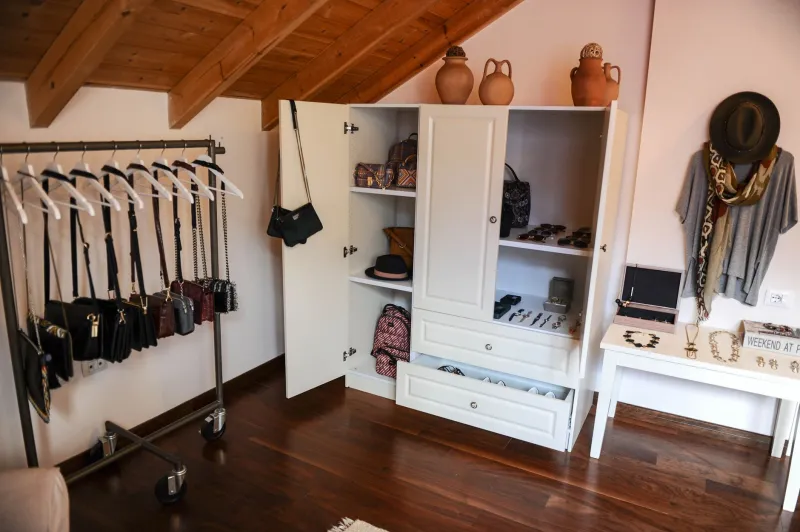
There is a particular kind of stillness that descends upon a well-appointed closet — the quiet satisfaction of curation, of objects chosen with deliberate care arranged in harmonious order. For many Saint Laurent collectors across the United States, that stillness is, at best, temporary. Within weeks, sometimes days, of what feels like a definitive acquisition, a new silhouette appears. A leather is introduced in a shade that did not exist the previous season. A clasp is refined in a way that renders the previous iteration subtly, undeniably, less resolved. The wardrobe that felt complete at noon is, by evening, conspicuously lacking.
This is not coincidence. It is, in many respects, the central dynamic of serious luxury collecting — and Saint Laurent has mastered it with uncommon sophistication.
The Illusion of Completeness
To understand why accomplished collectors continue acquiring, one must first examine what "complete" means in the context of a living fashion house. Unlike a painting or an antique, a Saint Laurent handbag exists within an evolving creative dialogue. Each season, the house's designers revisit foundational silhouettes — the Loulou, the Sac de Jour, the Kate, the Niki — and subject them to a process of considered refinement. A proportion shifts. A chain is elongated. A grain leather gives way to a matte calfskin of different hand and luminosity.
To the uninitiated, these changes appear cosmetic. To the trained collector, they represent meaningful aesthetic evolution — and, critically, they reframe every existing piece in the wardrobe as belonging to a prior chapter rather than the current one.
This is not manipulation in any crude sense. It is, rather, the natural consequence of engaging with a house that takes its own creative development seriously. The challenge for the collector is distinguishing between genuine evolution and the psychological pressure to remain current.
Fear of Missing Out, Reframed as Connoisseurship
In broader consumer culture, the fear of missing out is frequently dismissed as an anxiety of the inexperienced — a condition that maturity and confidence are supposed to resolve. Among luxury collectors, however, FOMO operates with considerably more nuance and, in certain respects, greater justification.
Saint Laurent produces limited quantities of select colorways and hardware configurations. Certain leathers — particular grades of box calf, specific vegetable-tanned iterations — appear for a single season and are not revisited. When a collector who already owns three variations of a given silhouette encounters a fourth in a leather that has never before been offered, the calculus shifts. The question is no longer "Do I need this?" but rather "Will I regret not acquiring it when I had the opportunity?"
This reframing is psychologically significant. It transforms desire into prudence, and accumulation into stewardship. The collector is no longer indulging; she is preserving access to something irreplaceable. Whether this reasoning is genuinely sound or elegantly rationalized is, perhaps, beside the point. It is persuasive, and it is sincere.
The Role of Identity in Repeat Acquisition
American luxury culture has, over the past decade, undergone a meaningful shift in how ownership is understood and expressed. Conspicuous consumption has given way — at least among the most sophisticated consumers — to what cultural critics have termed "considered accumulation": the idea that a refined collection reflects not wealth alone, but taste, knowledge, and editorial judgment.
Within this framework, the Saint Laurent collector who owns eight bags is not simply someone who has spent considerably. She is someone who has made eight distinct curatorial decisions, each of which reflects a particular moment in her aesthetic development. The earliest acquisitions speak to foundational instincts; the most recent, to a more evolved and exacting sensibility. The collection, taken as a whole, becomes a kind of autobiography — legible to those who understand the grammar of the house.
This identity dimension makes cessation genuinely difficult. To stop acquiring is, in some sense, to declare the autobiography finished. And for collectors whose sense of self is meaningfully tied to aesthetic engagement, that finality can feel premature regardless of how substantial the existing wardrobe may be.
When Marketing Meets Genuine Desire
It would be intellectually dishonest to discuss repeat purchasing without acknowledging the role of sophisticated marketing in sustaining it. Saint Laurent, like all major luxury houses, invests heavily in maintaining a sense of cultural urgency around its collections. Editorial placements, carefully managed scarcity, and the deliberate cultivation of a waiting-list culture all serve to ensure that demand consistently outpaces supply — or at least appears to.
The house's social presence reinforces this dynamic. Campaign imagery is released in carefully timed increments. Collaborations with cultural figures of genuine influence ensure that the brand remains visible within the spaces where aspirational identity is formed and contested. For the collector who is already deeply invested — financially and emotionally — in the Saint Laurent aesthetic, each new campaign serves as both affirmation and provocation.
Yet it would be equally reductive to attribute repeat purchasing entirely to marketing efficacy. The collectors who return season after season are, in the main, individuals of considerable discernment. They are not responding to advertising uncritically; they are responding to objects of genuine quality, produced by a house with a coherent and distinguished creative vision. The marketing creates the occasion for desire; the object itself sustains it.
Toward a More Deliberate Practice
For those who find themselves caught in the collector's contradiction — simultaneously satisfied and compelled — a degree of structured reflection can be valuable. Before each acquisition, it is worth asking not merely whether a new piece is beautiful (it almost certainly is) but whether it performs a function — aesthetic, emotional, or practical — that is not already served by something in the existing wardrobe.
This is not an argument for restraint as an end in itself. A collection that grows with intention is no less a collection than one that grows with abandon. The distinction lies in the clarity of purpose that each addition represents. When a new Saint Laurent piece genuinely extends the wardrobe's range — in color, in scale, in occasion — its acquisition is straightforwardly defensible. When it replicates what already exists, the more interesting question is what that replication reveals about the collector's evolving relationship with the house.
Some collectors find that this kind of reflection deepens rather than diminishes their engagement. Understanding why one is drawn to a particular piece — and whether that draw is rooted in genuine affinity or in the more transient pressures of scarcity and social visibility — produces a more considered and ultimately more satisfying relationship with the collection as a whole.
The Wardrobe as a Living Document
Perhaps the most honest conclusion is that the Saint Laurent wardrobe is, by its nature, never complete — and that this incompleteness is not a flaw but a feature. A house that has remained creatively vital for more than six decades does not produce static objects; it produces works that participate in an ongoing conversation about elegance, modernity, and the relationship between the two.
To collect Saint Laurent is to accept an invitation into that conversation. The closet audit that reveals everything one already owns is not, therefore, evidence that acquisition should cease. It is, rather, the starting point for a more refined understanding of what the collection is saying, and what it might yet be capable of expressing.