Coast to Coast Luxury: How American Regional Identity Shapes Saint Laurent Handbag Preferences
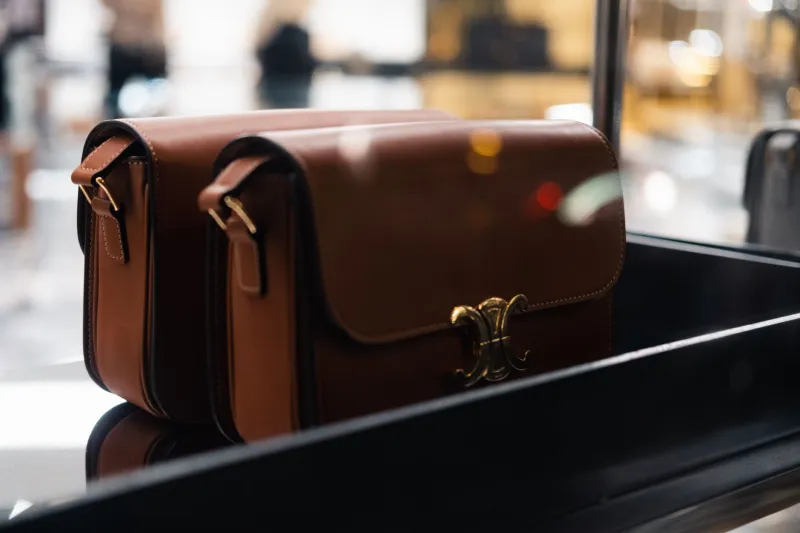
The United States is not a monolith. Its fashion sensibilities fracture beautifully across time zones, coastlines, and climates—and nowhere is this more evident than in the way American consumers engage with Saint Laurent handbags. While the maison's design philosophy remains singular and unwavering, the preferences it inspires vary considerably depending on where one lives, works, and moves through the world.
Understanding these regional distinctions offers more than mere curiosity. For the discerning collector, it provides a richer context for acquisition decisions, affirming that the right bag is not only a matter of personal taste but also one of place.
The Sun Belt's Appetite for Boldness
In cities like Miami, Houston, and Los Angeles, Saint Laurent's more expressive offerings command particular loyalty. The warm-weather permanence of these markets encourages year-round visibility, which in turn rewards handbags that make a statement. Miami, in particular, has developed a strong affinity for the maison's chromatic range—cobalt blues, warm terracottas, and deep fuchsias perform exceptionally well in a city where luxury is meant to be seen rather than concealed.
The Solferino and the Icare tote, both architecturally bold and dimensionally generous, resonate strongly in Southern California, where the culture of casual luxury—elevated athleisure, weekend markets, sun-filled gallery openings—demands bags that move easily between registers. Patent leather finishes, which might feel excessive in other climates, find natural homes in South Florida's high-gloss social calendar.
Houston presents a slightly different case. The city's deep connection to formal occasion dressing—gala culture, energy-sector entertaining, and a robust debutante tradition—means that structured evening bags and compact chain-strap silhouettes remain consistent performers. The Kate bag, with its clean geometric line and versatile proportion, has maintained a loyal following here across multiple seasons.
The Northeast's Preference for Restraint
Travel north, and the vocabulary shifts entirely. In New England—Boston, Providence, and the broader Connecticut corridor—Saint Laurent's more austere expressions find their most appreciative audiences. The Puffer bag in muted tones, the Le 5 à 7 in black grained leather, and the Sac de Jour in its most conservative proportions speak fluently to a regional aesthetic that equates sophistication with subtlety.
New York occupies its own universe, functioning less as a regional market and more as a global one compressed into five boroughs. Manhattan's fashion consumers are among the most knowledgeable in the country, often approaching Saint Laurent acquisition with the rigor of a collector rather than a casual shopper. Limited-edition colorways, archival reissues, and hardware variations that might go unnoticed elsewhere are tracked and discussed with considerable precision in this market. The city rewards complexity.
What both New York and New England share, however, is a preference for longevity over novelty—a bias toward the investment piece that will perform across decades rather than the seasonal statement that peaks and retreats.
The Pacific Northwest: Functionality as Philosophy
Seattle and Portland present a fascinating case study in how environmental identity shapes luxury consumption. The Pacific Northwest's persistent precipitation and deeply embedded outdoor culture have not diminished appetite for Saint Laurent—they have simply redirected it. Consumers in this region gravitate toward the maison's more utilitarian silhouettes: the crossbody formats, the bucket-style constructions, and the textured leathers that weather gracefully rather than demanding constant protection.
There is also a pronounced preference in this region for darker, earthier tones—forest greens, deep burgundies, and the full spectrum of blacks and charcoals that align with the Northwest's natural palette. This is not minimalism for its own sake but rather an aesthetic fluency with the landscape, a desire for luxury that belongs to the environment rather than standing apart from it.
The South's Quiet Complexity
The American South defies easy characterization. In cities like Nashville, Atlanta, and Charlotte, a sophisticated luxury market has matured considerably over the past decade, driven by expanding professional classes, thriving creative industries, and a social culture that takes occasion dressing seriously. Saint Laurent's evening-ready pieces—compact flap bags, jeweled closures, velvet seasonal offerings—find enthusiastic audiences here, particularly during the spring and fall social seasons.
Yet the South also harbors a strong current of understated traditionalism. Generational wealth in this region often expresses itself through quality and discretion rather than conspicuous novelty. The Sac de Jour's clean lines and its reputation for durability make it a perennial favorite among consumers who value longevity and provenance equally.
The Midwest: Value-Conscious Luxury
In Chicago, Minneapolis, and the broader Great Lakes corridor, Saint Laurent consumers tend to approach acquisition with particular deliberateness. The Midwestern ethos of considered spending—luxury justified by lasting value rather than momentary desire—aligns well with the maison's reputation for enduring design. Here, the buying decision is rarely impulsive. Consumers research thoroughly, often consulting secondary market data and long-term resale performance before committing to a piece.
This market has also shown notable enthusiasm for Saint Laurent's more functional offerings: the roomy Cabas Y tote, the structured top-handle formats that transition between professional and social settings, and the hardware-forward designs that reward closer inspection. Chicago's brutal winter season also influences material preference; smooth leathers in deep, saturated tones outperform lighter seasonal offerings in a city that demands year-round wearability.
What the Map Reveals
What emerges from this geographic survey is not a fragmented picture of the American market but rather a deeply coherent one. Saint Laurent's breadth—its ability to speak in multiple registers simultaneously, from the boldly expressive to the quietly architectural—is precisely what allows it to resonate from coast to coast without diluting its identity.
The maison does not change to meet regional preferences. Rather, its range is wide enough that each market finds within it a fluent expression of its own particular sensibility. That is the mark of a genuinely global brand: not uniformity, but the capacity to feel local everywhere it lands.
For the American collector, understanding this regional dimension adds a meaningful layer to the acquisition conversation. A bag chosen with awareness of one's own cultural context is not merely a purchase—it is a declaration of belonging.