Texture as Identity: How Saint Laurent's Leather Vocabulary Speaks to Every Corner of America
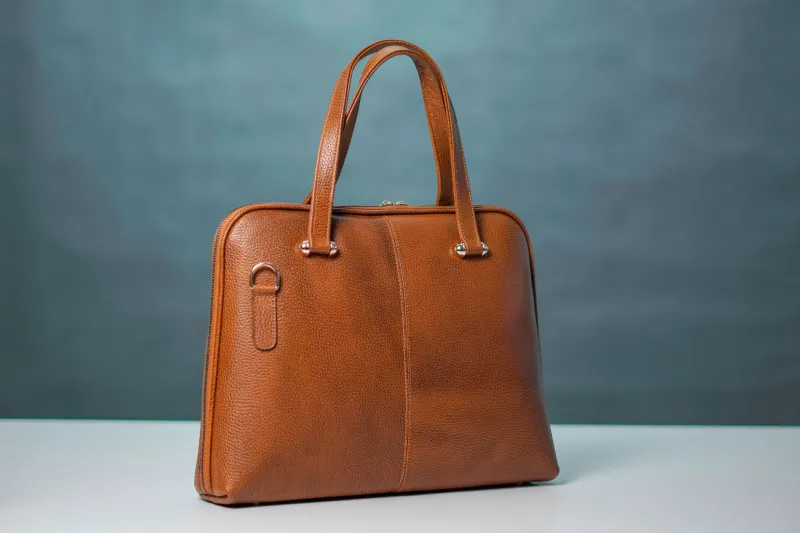
Leather, in the hands of Saint Laurent's ateliers, is never simply a material. It is a medium of communication — one capable of expressing restraint, provocation, ease, or authority depending on how it is treated, finished, and paired with hardware. Across the United States, where regional style cultures remain meaningfully distinct despite the homogenizing force of social media, different expressions of that leather vocabulary find their most devoted audiences. Understanding which textures speak to which markets is not merely an academic exercise. For the serious collector, it is essential intelligence.
The Saint Laurent Material Spectrum
Before examining regional preferences, it is worth surveying the breadth of Saint Laurent's leather language. The house works across a remarkable range of treatments: smooth calfskin in its most refined, mirror-like polish; grained leather with its subtle, tactile depth; supple lambskin that carries the quilted diamond motif with particular grace; crocodile-embossed finishes that announce themselves without requiring explicit branding; and suede, which introduces softness and informality into an otherwise architecturally rigorous collection.
Each of these materials carries a distinct set of cultural associations, and those associations map, with surprising precision, onto the style identities of America's major luxury markets.
New York: The Case for Structural Severity
In New York, where fashion operates as a form of professional armor and personal declaration simultaneously, smooth calfskin and grained leather dominate. The city's luxury consumer tends toward materials that project deliberate control — surfaces that do not invite casual interpretation, that age with dignity rather than character, and that pair as naturally with a tailored Proenza Schouler coat as with a weekend ensemble.
Fashion editors and stylists based in Manhattan consistently cite the Sac de Jour in smooth grain leather as the city's quintessential Saint Laurent expression. Its boxy silhouette and restrained surface texture mirror the architectural precision that New York's style culture prizes above almost everything else. Hardware in the city tends toward matte gold or oxidized brass — present but not insistent.
As one New York-based fashion consultant observed during a recent conversation, the city's relationship with luxury materials is fundamentally about legibility. The texture must communicate quality to the initiated without performing for the uninitiated. Saint Laurent's smooth and grained leathers accomplish this with particular sophistication.
Los Angeles: Warmth, Ease, and the Suede Equation
Los Angeles operates according to an entirely different set of material values. Where New York prizes severity, Los Angeles rewards ease. Where Manhattan's luxury consumer reaches for the polished and the precise, her counterpart in Silver Lake or Brentwood is more likely to gravitate toward textures that carry a sense of warmth and lived-in authenticity.
Suede, in this context, becomes a primary language. Saint Laurent's suede offerings — particularly the Loulou in muted desert tones or the small Niki in vintage-adjacent washes — find their most enthusiastic American audience in Southern California, where the light itself seems to collaborate with the material's soft, diffused surface. The embossed crocodile finishes also perform well in this market, appealing to a buyer who wants the suggestion of opulence without the formality that smooth calfskin can impose.
Hardware preferences in Los Angeles tend toward lighter, more casual expressions — silver-toned pieces, antique finishes, and the distinctive YSL interlocking logo rendered in a scale that reads as confident rather than conspicuous.
The South: Heritage, Richness, and the Enduring Appeal of Classic Grains
Across the American South — in Atlanta, Dallas, Nashville, and Miami — a distinct luxury aesthetic has asserted itself with growing commercial significance. Southern luxury consumers have historically shown a preference for materials that communicate heritage and richness: deeply grained leathers in cognac, burgundy, and chocolate tones that carry a sense of accumulated history.
The Saint Laurent Kate bag, with its structured silhouette and richly grained leather options, has found a particularly devoted following in Southern markets. The combination of classic construction and warm colorways aligns with a regional aesthetic that values tradition alongside contemporary relevance. Gold hardware, rendered in the house's characteristic warm tones, resonates strongly in markets where luxury signaling remains a more overt cultural practice than in, say, the deliberately understated vocabulary of the Pacific Northwest.
The Northeast Corridor Beyond New York: Quiet Luxury's Quieter Cousins
Boston, Washington D.C., and Philadelphia occupy a fascinating middle ground in the American luxury leather conversation. These markets share New York's appreciation for restraint but apply it with a slightly different set of priorities — less concerned with fashion-forward edge, more invested in the kind of understated authority that communicates old-money ease.
In these cities, pebbled grain leathers in navy, forest green, and classic black find their most natural home. The texture provides enough visual interest to signal quality without the overt fashion consciousness that smoother, more polished surfaces can imply. These consumers are buying Saint Laurent not as a fashion statement but as a logical extension of a wardrobe philosophy that has been decades in development.
Material Innovation as Cultural Mirror
What makes Saint Laurent's leather program genuinely remarkable is not simply the technical quality of the materials themselves — though that quality is exceptional — but the degree to which the collection's breadth functions as a cultural mirror. The house's consistent investment in new treatments, sustainable tanning processes, and hardware experimentation ensures that its material vocabulary continues to expand in dialogue with the evolving preferences of its American audience.
For the collector approaching a Saint Laurent purchase with regional self-awareness, this breadth is an invitation. The question is not merely which bag best suits your wardrobe, but which leather dialect best speaks the language of the life you are actually living — and the one you intend to build.