Signed, Sealed, Yours: How Saint Laurent's Customization Offerings Are Redefining the American Luxury Purchase
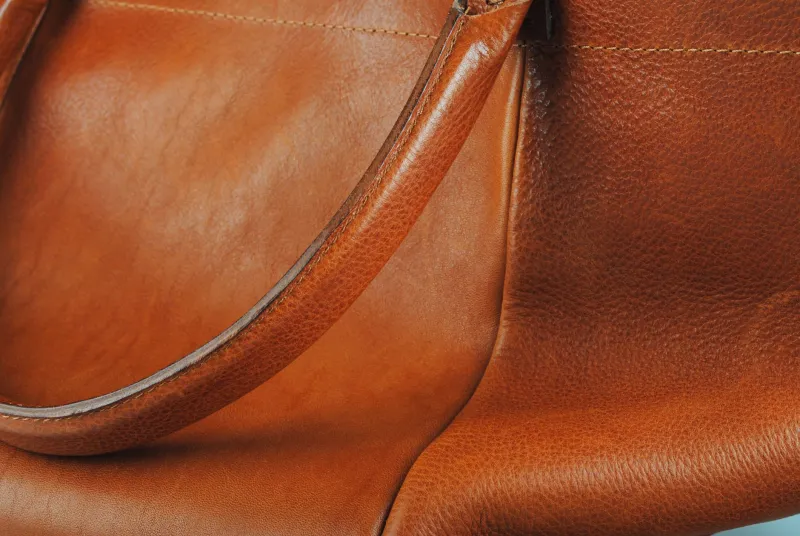
There is a particular kind of satisfaction that arrives when a luxury object bears your mark — not as an act of vanity, but as a declaration of permanence. A monogrammed Saint Laurent handbag is not merely a bag with initials pressed into its leather. It is an object that has been claimed, contextualized, and quietly removed from the realm of the interchangeable. This distinction, subtle as it may appear from the outside, is reshaping how a growing segment of American luxury consumers think about what it means to invest in a Saint Laurent piece.
Personalization is not new to the luxury industry. What is new is the seriousness with which American buyers are pursuing it — and the ways in which that pursuit is influencing everything from initial purchase decisions to long-term brand loyalty and the evolving logic of resale value.
From Accessory to Artifact: The Emotional Architecture of Customization
When an American consumer walks into a Saint Laurent boutique with the intention of commissioning a personalized piece, they are engaging in something more layered than a transaction. They are making a statement about how they intend to relate to the object over time. A bag that carries your initials, a meaningful date, or a color combination selected specifically for its resonance with your personal aesthetic is not a bag you sell when the season changes. It is a bag you keep.
This emotional architecture is precisely what Saint Laurent's customization services are designed to activate. By allowing clients to imprint their identity — however subtly — onto an already exceptional object, the house transforms the acquisition experience from a moment of consumption into an act of authorship. The client is no longer simply purchasing what the brand has made. They are completing it.
For many American buyers, particularly those who have accumulated several luxury handbags and are approaching their collections with greater intentionality, this distinction carries real weight. The personalized piece occupies a different psychological category than its unmodified counterparts. It is not merely owned; it is inhabited.
The Heirloom Impulse in American Luxury Culture
American luxury culture has historically been oriented toward the new — the latest season, the most recent drop, the silhouette that signals cultural currency in the present tense. This orientation has not disappeared, but it has been joined, and in some demographics meaningfully challenged, by a growing interest in objects that are built to last and intended to be passed down.
This heirloom impulse is particularly visible among millennial and older Gen Z consumers who came of age during a period of significant economic uncertainty and are now, in many cases, making their first substantial luxury investments. For these buyers, the question is not only whether a bag is beautiful today, but whether it will remain meaningful twenty or thirty years from now — whether it is the kind of object that could sit in a cedar-lined wardrobe and emerge, decades hence, as a piece of family history.
A Saint Laurent bag bearing a grandmother's initials, acquired in a specific city during a particular chapter of her life, carries a narrative weight that no unmodified bag can replicate. Customization is, in this sense, a form of biographical inscription. It ties an object to a life in ways that transform its value from financial to something considerably more difficult to quantify.
How Personalization Interacts with Resale Value
The relationship between customization and resale value is one of the more nuanced conversations currently unfolding in the American luxury market, and it deserves careful consideration rather than a simple verdict.
The conventional wisdom holds that personalized luxury goods are more difficult to resell, because the monogram or customization that makes the piece meaningful to its original owner may be irrelevant — or even off-putting — to a prospective buyer. This is accurate as a general principle, and collectors who purchase with resale potential as a primary consideration should weigh it accordingly.
However, the conversation has grown more complex. As the secondary market for luxury goods has matured and as authentication infrastructure has improved, buyers on resale platforms are increasingly sophisticated. A personalized Saint Laurent bag in exceptional condition, with a clearly documented provenance, can command interest precisely because of its customization — particularly when the monogram is executed in a classic, understated manner that reads as elegant rather than idiosyncratic.
More significantly, the collectors who are most drawn to Saint Laurent's customization services are, by and large, not purchasing with resale in mind. They are purchasing with permanence in mind. For this buyer profile, the resale calculus is secondary to the conviction that the piece will remain with them — or with someone they love — for the foreseeable future.
The Craft Behind the Customization
Saint Laurent's approach to personalization reflects the house's broader commitment to artisanal quality. Monogramming services, where offered, are executed with the same attention to precision and material integrity that defines every other aspect of the brand's production. The choice of placement, font, and finishing is not incidental — it is a considered design decision that must harmonize with the bag's existing lines, hardware, and leather grain.
For American clients engaging with these services, the process typically begins with a boutique consultation. This is not a kiosk experience or a digital configurator, though the brand's online channels offer preliminary guidance. It is a conversation — one that allows the client to understand the full range of available options, to consider how different customization choices will read against the specific piece they have selected, and to make a decision that they will be satisfied with for years to come.
This consultative dimension is itself part of the value proposition. The time and attention invested in a customization appointment reinforces the sense that the resulting object is genuinely singular.
A New Language of Luxury Ownership
What Saint Laurent's customization services ultimately reflect is a broader shift in how American consumers are learning to speak about luxury. The old vocabulary — centered on brand recognition, seasonal relevance, and visible status signals — has not been abandoned, but it has been supplemented by a newer, more interior language. This language prizes authenticity over display, longevity over novelty, and personal meaning over collective aspiration.
In this context, a personalized Saint Laurent handbag is not a departure from luxury values. It is, perhaps, their most complete expression — an object that is exquisitely made, culturally resonant, and unmistakably, irreversibly yours.