Spending Less to Own More: The Hidden Economics Behind Saint Laurent's Price-to-Value Proposition
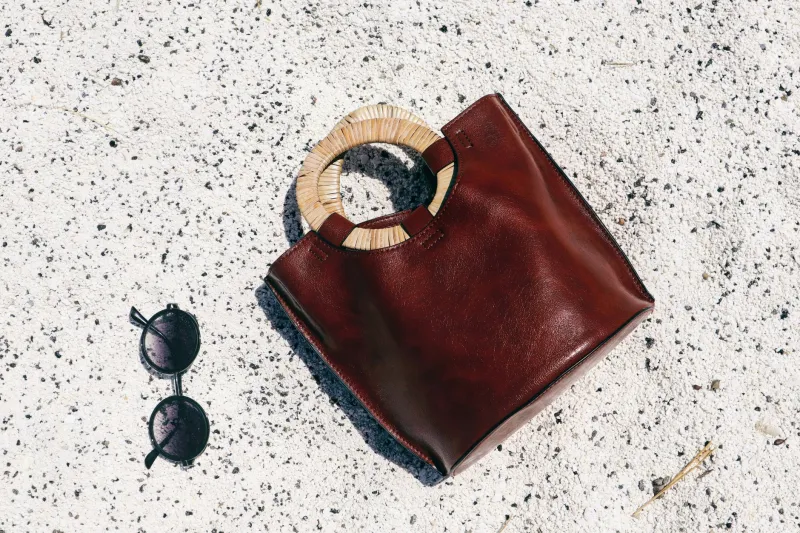
There is a persistent myth circulating in American luxury retail circles — the belief that a higher price tag is, by definition, a signal of superior quality. Walk through the handbag floor of any major department store from New York to Beverly Hills, and you will encounter bags adorned with monogram hardware, quilted panels layered over quilted panels, and logo-emblazoned chains that jangle with every step. These pieces frequently command prices that exceed comparable Saint Laurent offerings by several hundred, sometimes several thousand, dollars. And yet, when examined through the lens of material quality, structural longevity, and cost-per-wear economics, the case for those embellishment-heavy alternatives becomes surprisingly difficult to sustain.
Saint Laurent occupies a genuinely unusual position in the luxury market. Its most iconic silhouettes — the Lou, the Solferino, the Sac de Jour — are priced at points that, relative to certain European competitors, appear almost restrained. This apparent modesty is not accidental. It is the financial expression of a design philosophy that has always prioritized architectural integrity over decorative theater.
What You Are Actually Paying For
To understand Saint Laurent's pricing logic, it helps to disaggregate what constitutes the cost of a luxury handbag. Broadly speaking, price is determined by four variables: raw material quality, production labor, brand overhead (including marketing and retail infrastructure), and design complexity. Where some houses allocate a significant portion of their cost structure to elaborate hardware, intricate embroidery, or logo-centric branding campaigns, Saint Laurent directs its investment toward the first two categories almost exclusively.
The leathers sourced for Saint Laurent's core collections — full-grain calfskin, supple lambskin, and structured grained leather — are procured from tanneries with long-standing reputations in the European luxury supply chain. These are not commodity materials. The finishing is precise, the hand feel is immediate, and the aging characteristics are well-documented among collectors. You are paying, in essence, for the material itself rather than for the theater surrounding it.
Contrast this with a competitor charging a 40 percent premium for a bag whose primary value proposition is its recognizability — its capacity to signal status through visible branding rather than through the quiet authority of its construction. The additional cost, in such cases, is largely a marketing expense transferred to the consumer.
The Cost-Per-Wear Calculation
American consumers increasingly apply cost-per-wear analysis to clothing and footwear purchases, yet the same discipline is rarely extended to handbags with the rigor it deserves. The calculation is straightforward: divide the purchase price by the number of times an item is used over its functional lifetime. A bag used three times a year for two years yields a very different figure than one carried daily for a decade.
This is where Saint Laurent's value proposition becomes genuinely compelling. The house's most popular silhouettes are designed for daily use. Their structures are engineered to withstand the rigors of an active professional life — commuting in Chicago, traveling between coasts, transitioning from client meetings to evening engagements. The hardware is minimal by design, which means there are fewer components subject to wear, tarnishing, or structural failure. The stitching is tight and consistent. The interior linings are selected for durability rather than decorative effect.
A Saint Laurent Sac de Jour purchased at its current retail price point, carried five days a week by a working professional, will accumulate well over 200 uses in its first year alone. At that frequency, the cost-per-wear mathematics become almost difficult to argue against — particularly when measured against a competitor's bag purchased at a 50 percent premium but carried only on special occasions because its embellishment profile makes it unsuitable for daily rotation.
Why Restraint Resists Obsolescence
There is another economic dimension to Saint Laurent's design philosophy that is rarely discussed in conventional luxury retail analysis: the relationship between aesthetic restraint and resale value stability. Bags that rely heavily on seasonal embellishments — the chain-link trend of one year, the oversized logo hardware of the next — are subject to the same cycles of fashion obsolescence that govern ready-to-wear. Their resale values decline proportionally as the aesthetic moment that defined them recedes.
Saint Laurent's architectural silhouettes do not operate within these cycles in the same way. The Sac de Jour looked authoritative in 2013 and it looks authoritative today. The Lou's curved profile has not dated. These bags were not designed to reflect a specific cultural moment; they were designed to transcend them. The secondary market reflects this durability. Authenticated pre-owned Saint Laurent bags in excellent condition consistently retain meaningful percentages of their original retail value — a characteristic that further strengthens the cost-per-wear argument when the eventual resale value is factored into the total cost equation.
The Embellishment Premium, Reconsidered
It would be inaccurate to suggest that embellishment-heavy bags have no legitimate value. For collectors who purchase with the explicit intention of display rather than daily use, the visual complexity of a heavily ornamented piece may justify its premium. For buyers whose primary concern is immediate social signaling, the recognizability of a logo-forward design serves a clear purpose.
But for the American consumer who approaches luxury handbag acquisition as a considered, long-term investment — who carries her bag to the office on Monday and to dinner on Saturday, who expects her purchase to remain relevant across multiple seasons and professional contexts — the calculus shifts decisively. The embellishment premium begins to look less like an investment in quality and more like a surcharge on novelty.
Saint Laurent's pricing, viewed through this framework, is not modest. It is precise. The house charges what the materials and craftsmanship warrant, without inflating the figure to accommodate the cost of maintaining a marketing apparatus built around conspicuous branding. The result is a purchase that rewards the buyer's intelligence rather than exploiting her appetite for status theater.
Making the Case for Architectural Investment
For buyers currently navigating the luxury handbag market, the practical implication of this analysis is straightforward: before committing to a purchase at any price point, demand transparency about what is actually being priced. Ask whether the premium reflects material quality and construction precision, or whether it reflects the brand's investment in its own visibility. Consider the use case honestly — how frequently will this bag be carried, in how many contexts, and over how many years?
Saint Laurent's most expensive bags are, in many respects, its most economical. Not because they are cheap — they are not — but because they are priced in honest relationship to what they deliver: enduring structure, exceptional materials, and a design sensibility that refuses to compete on the terms of the season. In a market that frequently rewards spectacle over substance, that kind of financial clarity is itself a form of luxury.