From Impulse to Intention: A Strategic Framework for Auditing Your Saint Laurent Collection
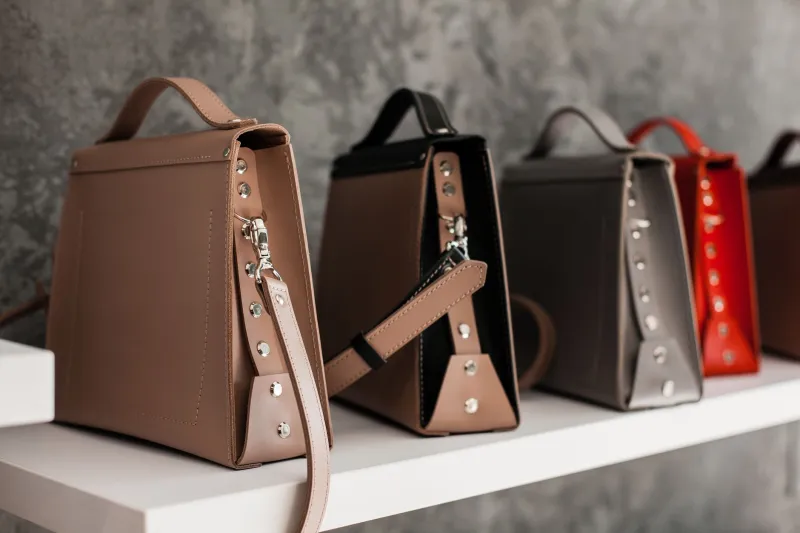
There is a particular kind of collector who acquires with feeling rather than strategy. Each Saint Laurent handbag arrives with its own compelling narrative—a seasonal campaign, a chance encounter in a boutique, a moment of reward after professional achievement. And yet, when these pieces hang together in a closet, the collection sometimes tells a disjointed story: three black crossbody bags, no structured tote, and nothing remotely appropriate for a formal evening in New York or Chicago.
The closet audit is not a moment of self-criticism. It is, rather, the most honest conversation a collector can have with her own wardrobe—and the most productive step she can take before her next significant purchase. Approached with the same discernment Saint Laurent applies to each of its seasonal offerings, this process transforms a series of individual acquisitions into a coherent, purposeful collection.
Step One: Lay Everything Out and Resist the Urge to Justify
Begin by removing every Saint Laurent piece from storage, dust bags included, and arranging them in a single visible space. Resist the instinct to immediately categorize or defend. This initial survey is purely observational. Note what you see without editorial commentary: the silhouettes present, the hardware finishes, the scale of each piece relative to the others.
Many collectors are surprised by what this exercise reveals. A wardrobe that felt diverse in the moment of acquisition frequently displays significant redundancy when viewed as a whole. Three iterations of the Lou camera bag in different sizes, for instance, may indicate a preference for a particular silhouette but a neglect of functional range. Conversely, a collector who has pursued variety may discover that her pieces share almost no color language, making it difficult to build coherent outfits around them.
The goal of this first step is simply to see clearly.
Step Two: Map Each Piece Against Occasion
Once your collection is visible, begin sorting by occasion rather than by style or season. Create three broad categories: structured professional settings, social and evening contexts, and casual or weekend use. Assign each bag to the category where it most naturally belongs—and be honest about pieces that are technically versatile but that you never actually reach for in certain situations.
Gaps become immediately apparent through this exercise. A collector who works in a formal industry and attends regular charity events in cities like Los Angeles, Dallas, or Washington, D.C., may find that her collection skews heavily toward casual silhouettes—the kind of pieces that photograph beautifully but leave her reaching for a non-Saint Laurent option on the occasions that matter most.
Conversely, an over-investment in structured, occasion-specific pieces with no relaxed everyday option is equally limiting. Saint Laurent's range is broad enough to address every register of American life, from a board presentation to a Sunday farmers market. A complete collection should reflect that range.
Step Three: Conduct a Color Story Analysis
Color coherence is one of the most overlooked dimensions of collection-building, and one of the most consequential. Pull each bag and note its primary color, its hardware tone, and any secondary color elements such as piping, lining, or hardware accents. Lay them out in a rough spectrum.
A well-curated Saint Laurent collection typically anchors itself in one or two neutrals—classic black, warm caramel, or a deep ivory—before introducing seasonal color as punctuation rather than foundation. If your audit reveals an overabundance of one neutral with no tonal variation, you are missing the opportunity to use color as a wardrobe tool. If it reveals an array of seasonal colors without a strong neutral backbone, you may find that individual pieces are difficult to integrate into a broad range of outfits.
Also consider hardware. Saint Laurent offers both gold and silver hardware across most of its key silhouettes, and mixing both tones without intention can create visual noise rather than personality. Identify which hardware direction your wardrobe currently favors and consider whether your next acquisition should reinforce or intentionally contrast that pattern.
Step Four: Assess Functional Range
Fashion collectors sometimes undervalue function in favor of form, but the most sophisticated wardrobes address both. Evaluate your current Saint Laurent pieces along a functional axis: Which can carry a tablet or document folder? Which are suitable for hands-free wear during travel? Which offer enough interior organization for daily essentials without bulk?
Saint Laurent's catalog spans a remarkable range of functional profiles—from the capacious Sac de Jour, which functions as a true work bag, to the compact Envelope clutch, which serves as an evening essential. Between those poles exist dozens of silhouettes calibrated for specific carrying needs. If your collection clusters at one end of this spectrum, your next acquisition should logically address the other.
For American collectors who move between professional environments and social engagements—often within the same day—a bag that transitions gracefully between contexts is frequently the most significant gap. Identifying that gap precisely is the work of this step.
Step Five: Define the Acquisition Criteria Before You Shop
With the audit complete, translate your findings into a specific acquisition brief. Not a mood board, not a general preference, but a concrete set of criteria that any candidate piece must satisfy. This brief might read: a structured silhouette in a warm neutral, gold hardware, sufficient interior volume for a full workday, appropriate for both professional and social settings.
This level of specificity is not restrictive—it is liberating. It eliminates the noise of seasonal marketing, the persuasive pull of a compelling campaign image, and the momentary desire that does not serve the long-term collection. It allows you to walk into a Saint Laurent boutique or engage with an authenticated resale source with clarity rather than susceptibility.
The brief also serves a secondary purpose: it protects against the accumulation of beautiful redundancy. When every new acquisition is measured against an honest assessment of what already exists, the collection grows in quality rather than merely in quantity.
The Collection as a Living Document
A Saint Laurent collection is never truly finished. The house continues to evolve its vocabulary, and a collector's life—her professional context, her social world, her aesthetic sensibility—evolves alongside it. The closet audit is most valuable not as a one-time exercise but as a recurring discipline, ideally conducted at the turn of each major season.
What changes over time is the precision of the assessment. A collector who conducts this audit annually develops an increasingly refined understanding of her own wardrobe logic—what she reaches for, what she overlooks, and what she has always needed but never quite articulated. That understanding, applied consistently, is what separates an accumulation of luxury pieces from a true collection.
Saint Laurent has spent decades building a design language defined by intentionality. The most fitting tribute a collector can offer is to apply that same intention to the wardrobe she builds around it.